Gynaecological Endoscopy in Gregory Hills: Minimally Invasive Diagnosis and Treatment
Advances in medical technology mean many gynaecological conditions can now be diagnosed and treated through minimally invasive procedures. For women in Gregory Hills and south-west Sydney, Dr Nader Bakhit offers expert gynaecological endoscopy — including laparoscopy and hysteroscopy — to provide faster recovery and better outcomes.
If you have been told you may need a gynaecological procedure, or you are experiencing symptoms that require investigation, this guide explains what endoscopy involves and how it may benefit you.
What Is Gynaecological Endoscopy?
Gynaecological endoscopy refers to a group of minimally invasive procedures that use small cameras and specialised instruments to examine and treat conditions within the reproductive system. Rather than making large surgical incisions, the surgeon operates through tiny openings, resulting in less tissue damage, reduced pain, and faster healing.
The two most common types of gynaecological endoscopy are laparoscopy and hysteroscopy, each serving different diagnostic and therapeutic purposes.
Laparoscopy: Keyhole Abdominal Surgery
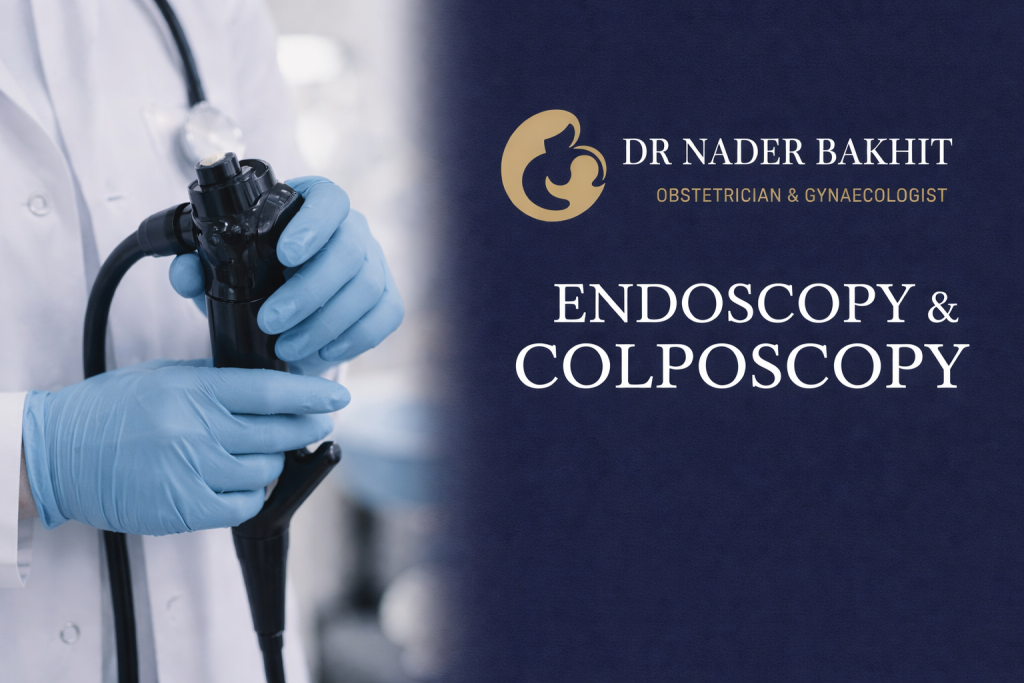
Laparoscopy involves inserting a thin camera (laparoscope) through one or more small incisions in the abdomen, typically near the navel. This allows the surgeon to view the pelvic organs directly on a monitor and perform treatment at the same time.
Common reasons for laparoscopy include:
- Endometriosis — diagnosis and surgical excision of endometriotic tissue
- Ovarian cysts — removal while preserving ovarian function
- Ectopic pregnancy — emergency treatment of pregnancies outside the uterus
- Pelvic adhesions — division of scar tissue causing pain
- Tubal surgery — sterilisation or investigation of tubal patency
- Unexplained pelvic pain — direct visualisation to identify the cause
Dr Bakhit has extensive experience in laparoscopic surgery and favours this approach wherever clinically appropriate. Learn more on our Surgical Procedures page.
Hysteroscopy: Examining the Uterus
Hysteroscopy involves passing a thin telescope through the cervix to examine the inside of the uterus. No abdominal incisions are needed, making it one of the least invasive gynaecological procedures available.
Hysteroscopy is commonly used to investigate and treat:
- Abnormal uterine bleeding — identifying the cause of heavy or irregular periods
- Uterine polyps — removal of benign growths
- Submucosal fibroids — removal of fibroids projecting into the uterine cavity
- Intrauterine adhesions — division of scar tissue (Asherman’s syndrome)
- Abnormal uterine findings — investigation of abnormalities detected on ultrasound
Many hysteroscopic procedures can be completed as day surgery, and recovery is typically straightforward.
Benefits of Minimally Invasive Surgery
Compared to traditional open surgery, endoscopic procedures offer significant advantages:
- Smaller incisions — often just 5 to 10 millimetres
- Less postoperative pain — reduced tissue disruption
- Shorter hospital stay — many procedures are same-day
- Faster recovery — return to normal activities in one to two weeks for most women
- Reduced scarring — minimal cosmetic impact
- Lower infection risk — smaller wounds mean less exposure
These benefits make endoscopy the preferred approach for many gynaecological conditions when surgery is required.
Endoscopy Services in Gregory Hills
Dr Bakhit consults at The George Center in Gregory Hills and at Liverpool, with procedures performed at partner hospitals in south-west Sydney. Women from Oran Park, Camden, Narellan, Campbelltown, Harrington Park, and surrounding suburbs access his endoscopic expertise locally.
If you have been referred for a gynaecological procedure, or your gynaecologist has recommended further investigation, Dr Bakhit can assess whether endoscopy is appropriate for your situation during an initial consultation.
Frequently Asked Questions About Gynaecological Endoscopy
Considering a Minimally Invasive Procedure?
Book a consultation with Dr Bakhit to discuss whether endoscopy is the right option for you. Call (02) 9824 3991.